Digital Transformation Roadmap: How Houston Manufacturers Can Leverage Industry 4.0
Houston’s manufacturing sector faces unprecedented opportunities — and competitive pressures — from Industry 4.0 technologies. Here’s a practical roadmap for leveraging AI, IoT, automation, and advanced analytics to drive efficiency, quality, and growth.
Houston Manufacturing in the Industry 4.0 Era
Houston is a manufacturing powerhouse. The Greater Houston area is home to more than 5,000 manufacturing establishments spanning petrochemicals, refined petroleum products, industrial machinery, fabricated metals, and food processing. The region’s manufacturing sector generates over $50 billion in annual output and employs hundreds of thousands of workers.
But this industrial strength is being challenged. Competition from lower-cost regions, supply chain volatility exposed by the pandemic, labor shortages, and increasing customer demands for customization and speed-to-market are forcing Houston manufacturers to fundamentally rethink how they operate. The answer — for manufacturers of every size — is Industry 4.0.
Industry 4.0, the fourth industrial revolution, represents the convergence of physical manufacturing with digital technologies: the Internet of Things (IoT), artificial intelligence, cloud computing, advanced robotics, augmented reality, and big data analytics. Manufacturers that successfully implement these technologies are achieving dramatic improvements in productivity, quality, and cost efficiency — while those that don’t risk being left behind.
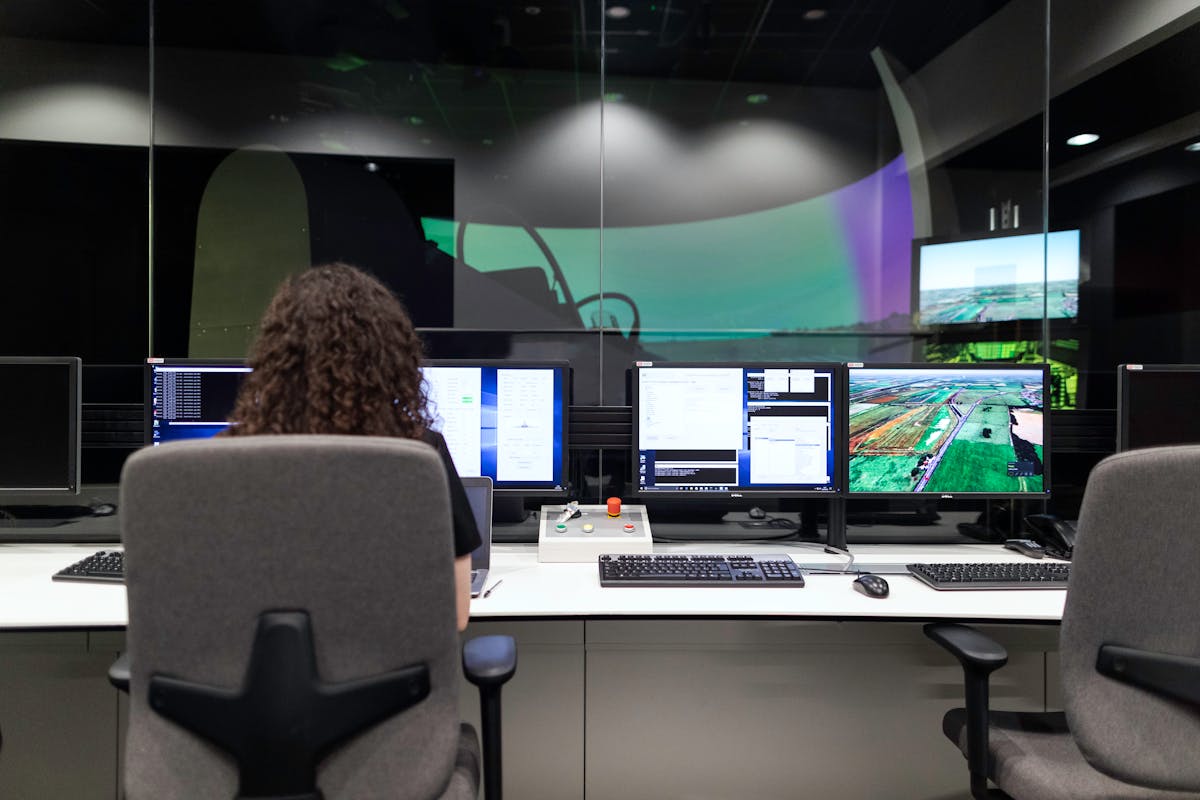
The 9 Pillars of Industry 4.0 for Houston Manufacturers
Industry 4.0 isn’t a single technology — it’s an ecosystem of interconnected digital capabilities. Understanding which pillars are most relevant to your Houston manufacturing operation is the first step in building your digital transformation strategy.
Industrial IoT (IIoT)
Connected sensors and devices on equipment, products, and facilities generate real-time operational data that drives smarter decisions — from predictive maintenance to quality control.
Cloud Computing
Scalable cloud infrastructure replaces on-premise servers, enabling manufacturers to process massive datasets, access global ERP systems, and collaborate across facilities and supply chains.
AI & Machine Learning
AI algorithms analyze production data to optimize scheduling, predict failures before they occur, detect quality defects automatically, and continuously improve manufacturing processes.
Additive Manufacturing
3D printing enables rapid prototyping, on-demand spare parts production, and mass customization — reducing lead times and inventory costs while enabling new product designs.
Augmented Reality
AR overlays digital information onto physical environments — guiding assembly workers, enabling remote expert assistance, and providing technicians with real-time maintenance instructions.
OT Cybersecurity
As operational technology (OT) connects to IT networks, protecting industrial control systems, SCADA, and PLCs from cyber threats becomes mission-critical for production continuity.
Big Data & Analytics
Manufacturing generates enormous data volumes. Advanced analytics transforms raw data into actionable insights — optimizing supply chains, production planning, and energy consumption.
Autonomous Robotics
Collaborative robots (cobots) and autonomous mobile robots (AMRs) work alongside human workers — handling repetitive, hazardous, or precision tasks that improve throughput and safety.
Digital Twin
Virtual replicas of physical assets, processes, and supply chains allow manufacturers to simulate changes, optimize performance, and test scenarios without disrupting real production.
Your Industry 4.0 Digital Transformation Roadmap
Digital transformation in manufacturing isn’t a single project — it’s a journey that unfolds in stages. This roadmap reflects the proven approach xS™ IT Consulting uses to guide Houston manufacturers from their current state to a fully integrated smart factory environment:
Digital Maturity Assessment & Strategy Definition
Before investing in new technologies, you need an honest assessment of where you are today. Map your current IT/OT infrastructure, evaluate process maturity, identify the biggest operational pain points (downtime, quality defects, supply chain delays), and define measurable business outcomes for your transformation. This assessment becomes the foundation for every subsequent investment decision, ensuring technology choices align with actual business value.
Network Modernization & IT/OT Connectivity
Industry 4.0 runs on data — and data requires robust network infrastructure. This phase involves upgrading to industrial-grade Wi-Fi 6, implementing secure OT network segmentation (separating production systems from business networks), deploying edge computing nodes near production equipment for low-latency data processing, and establishing the cloud connectivity that will serve as your digital backbone. This is foundational infrastructure that everything else builds upon.
IIoT Sensor Deployment & Data Acquisition
Deploy IoT sensors on critical equipment to capture real-time operational data: temperature, vibration, pressure, cycle times, energy consumption, and production counts. Integrate with existing PLCs and SCADA systems to aggregate data from legacy equipment without full replacement. Establish a data historian and manufacturing data lake that consolidates all operational data in a queryable, structured format. This phase turns your shop floor into a data-generating asset.
Real-Time Dashboards & OEE Monitoring
Transform raw sensor data into actionable operational visibility. Deploy manufacturing execution system (MES) dashboards that give plant managers real-time views of Overall Equipment Effectiveness (OEE), production throughput, and quality metrics. Implement automated alerting when KPIs deviate from targets. This phase delivers immediate ROI through improved decision-making, faster response to production issues, and baseline metrics that will measure all future improvements.
Predictive Maintenance & AI-Powered Analytics
Move from reactive (fix it when it breaks) to predictive maintenance (fix it before it breaks). AI models trained on your historical equipment data learn to recognize the early warning signatures of imminent failures — typically identifying issues 2-6 weeks before a breakdown occurs. Extend AI analytics to quality control (automated defect detection via computer vision), production scheduling optimization, and supply chain demand forecasting. This phase delivers the biggest ROI leap in the digital transformation journey.
ERP Integration, Digital Twin & Full Ecosystem Connection
Connect shop floor data to enterprise systems — ERP, CRM, supply chain management, and financial reporting — eliminating the silos between operational and business data. Develop digital twin models of critical production assets and processes. Implement advanced robotics or cobots for identified automation opportunities. At this stage, your manufacturing operation has achieved full digital integration: every process generates data, every decision is informed by analytics, and your competitive advantage is systematically compounding.

Industry 4.0 in Action: Houston Manufacturing Use Cases
⚡ Petrochemical Plant — Predictive Maintenance
A Houston refinery deploys vibration and temperature sensors on 200 critical rotating assets (pumps, compressors, turbines). AI models detect bearing wear signatures 3 weeks before failure. Maintenance is scheduled during planned shutdowns rather than emergency stoppages.
🔩 Metal Fabrication — Computer Vision Quality Control
A Houston fabricated metals manufacturer installs AI-powered vision cameras at the end of production lines. The system inspects 100% of output for dimensional defects, surface flaws, and weld quality at production speed — replacing manual sampling inspection.
🍱 Food Processing — Energy Optimization
A Houston food and beverage processor connects refrigeration, HVAC, and production equipment to an IoT energy management platform. AI algorithms optimize energy consumption based on production schedules, utility rate periods, and ambient conditions.
🚢 Industrial Equipment — Digital Twin Implementation
A Houston industrial equipment OEM creates digital twins of their flagship product line. Engineers use virtual models to simulate customer operating conditions, optimize maintenance intervals, and develop predictive service offerings — shifting from product to service revenue model.
Overcoming Common Digital Transformation Barriers for Houston Manufacturers

How xS™ IT Consulting Powers Houston Manufacturing Digital Transformation
xS™ IT Consulting has deep expertise in both the IT side of Industry 4.0 — cloud infrastructure, cybersecurity, network modernization, and data analytics — and the operational technology context of Houston’s manufacturing industries. We serve as a bridge between the shop floor and the C-suite, translating business objectives into technology roadmaps and technology capabilities into measurable business outcomes.
Our Industry 4.0 services for Houston manufacturers include comprehensive digital maturity assessments that establish your baseline and prioritize investments, IT/OT network design and implementation with proper security architecture, IIoT platform selection and integration with your existing systems, cloud data infrastructure on AWS, Azure, or Google Cloud, and managed IT services that keep your growing digital ecosystem running reliably 24/7.
We also provide Fractional CTO services for manufacturing companies that need strategic technology leadership without a full-time hire — bringing enterprise-caliber digital transformation expertise to mid-market manufacturers who are ready to compete at the next level. Whether you’re just beginning your Industry 4.0 journey or looking to accelerate a transformation already in progress, xS™ IT Consulting is the Houston partner built for this moment in manufacturing history.
Start Your Industry 4.0 Journey Today
xS™ IT Consulting offers a complimentary Digital Maturity Assessment for Houston manufacturers — a structured evaluation of your current technology state and a prioritized roadmap for Industry 4.0 adoption tailored to your operations and business goals.
Schedule Your Free Assessment →